Ford EV: Rethinking the car-buying experience
Copy Lead
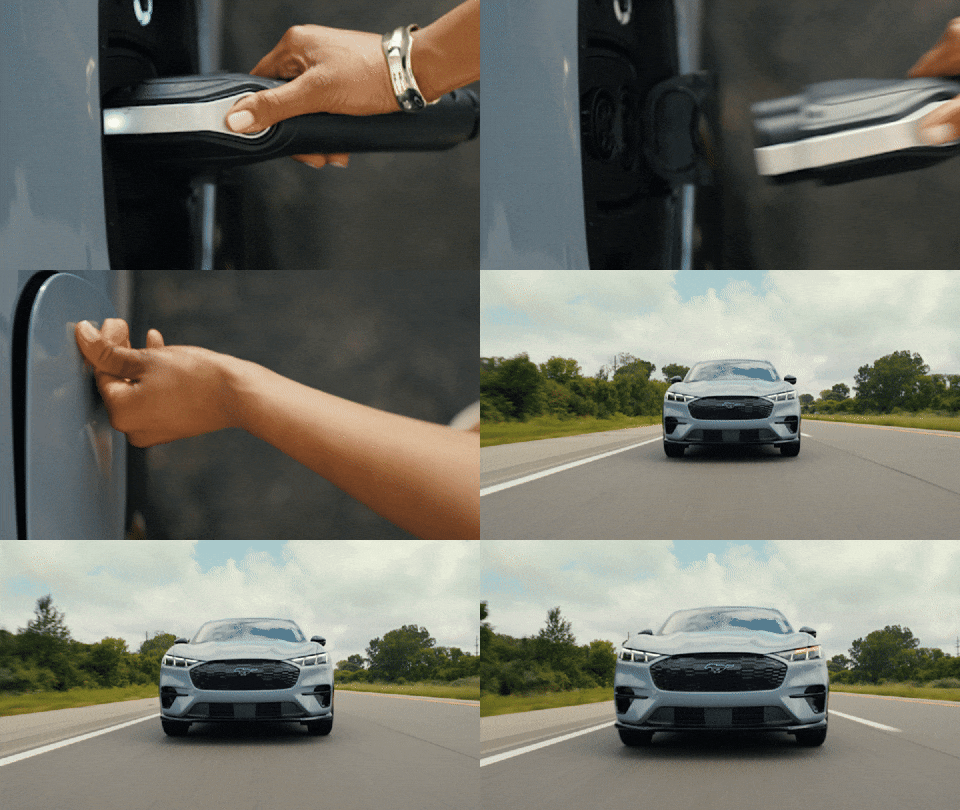
Buying a car online was already a big shift. Asking people to make that leap while also switching to an EV made things even more interesting. I led messaging strategy and UX writing for a new Ford EV shopping experience designed to answer the questions, concerns, and what-ifs that come with going electric.
The ask
Coming out of COVID, Ford was exploring new ways to sell vehicles directly through digital experiences. EVs gave the brand an opportunity to rethink the traditional shopping journey and create something built specifically around a new kind of customer. Our team was asked to imagine what that experience could be, from researching Ford’s growing EV lineup to understanding the technology, services, and ownership experience that came with it.
The goal
Make going electric feel like a natural next step. That meant helping people understand the cars without burying them in specs, addressing concerns around range, charging, and ownership, and giving Ford more control over the shopping experience from first visit through purchase and beyond.
The process
We started some blue sky thinking. Early concepts explored everything from a standalone EV destination completely separate from Ford.com to a social-first shopping experience. These weren’t minor redesigns. The point was to ask what Ford EV shopping could look like if we weren’t starting with the existing website as the answer.
Through those explorations, one idea kept getting stronger: the experience shouldn’t be the same every time someone came back. Buying an EV can involve weeks or months of research. Someone curious about an F-150 Lightning for the first time needs different information from someone who has already compared range, researched home charging, and returned ready to talk numbers.
That became the foundation for a predictive, personalized experience that could learn from a shopper’s behavior and surface more useful content as they moved closer to buying.
The guiding principles
Make EV shopping less intimidating: Ford’s move into EVs meant reaching well beyond early adopters. The experience needed to answer unfamiliar questions around charging, range, technology, and ownership without making the transition feel like homework.
Keep Ford feeling like Ford: The brand needed to communicate its ambitions in EV technology without suddenly sounding like a Silicon Valley startup. We looked for ways to connect that future-facing story to something familiar, including framing the F-150 Lightning as a kind of Model T moment for the EV era: new technology made useful for more people.
Make repeat visits more useful: EV shoppers rarely make a decision in one sitting. The experience could use what someone had already explored to make each return visit feel more relevant and move them closer to a decision.
Reduce the homework: Personalization, comparison tools, and clearer content helped answer the questions that tend to slow EV shoppers down, especially around range anxiety, charging, pricing, and unfamiliar technology.
Make pricing easier to understand: A more direct e-commerce model gave Ford greater control over how pricing was presented, creating an opportunity to make the path from browsing to buying feel clearer.
Think beyond the sale: EV ownership introduced new features, connected services, and add-ons that could continue adding value after someone drove home. The experience needed to account for that relationship from the beginning.
From pitch to product
The project began as a pitch to Ford leadership, with intentionally ambitious concepts designed to show what the experience could become. We expected some of those ideas to get whittled down. Instead, Ford told us to build it.
From there, the concept became an ongoing collaboration between our team and Ford leadership. I worked alongside designers, UX experts, and strategists to turn the initial vision into a complete experience, while shaping the messaging, tone, and conversational logic along the way.
Review happened throughout the process. On our side, concepts moved through design, strategy, and account leadership before regular presentations with Ford marketing leadership. As the work developed, those reviews worked their way up to then-CMO Suzy Deering. That cadence continued from early concepts through build, giving us a chance to test ideas, respond to feedback, and keep the original ambition intact as the experience became real.
The result
A personalized Ford EV shopping experience designed to meet people wherever they were in the decision-making process. Early adopters might arrive ready to talk batteries, range, and performance. Someone considering their first EV might need to start with charging at home or whether an electric truck could handle their normal routine.
Instead of asking both people to navigate the same experience, the site could adapt based on what they had already seen, what they cared about, and where they were in the journey.
The work: Homepage
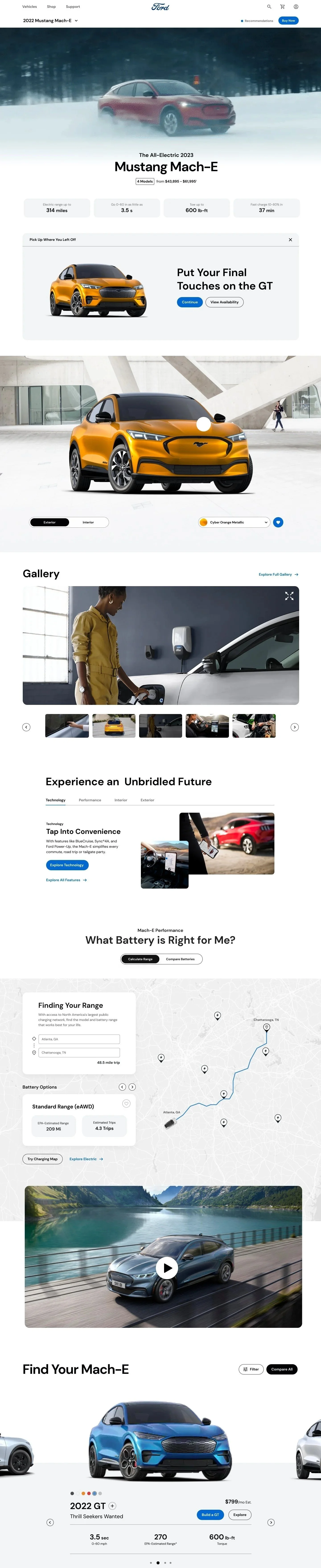
The homepage introduced Ford’s EV lineup while giving people multiple ways into the experience. Rather than assuming every visitor arrived ready to shop, the content balanced vehicle discovery, EV education, and the practical questions that could help someone take the next step.

The work: Model landing pages
The model experience changed as the shopper’s relationship with Ford changed.
A first visit introduced the vehicle and answered the big questions. A return visit could surface content based on previous behavior, helping someone pick up where they left off instead of starting over. Once authenticated, the experience could become even more specific to their needs and shopping progress.
The idea was simple: remember enough to be useful.

First Visit
Subsequent Visit

Authenticated Visit
The work: Comparison tool
EV shopping introduced a new set of things to compare. Range, charging, battery options, technology, and capability could quickly become a spreadsheet exercise.
The comparison experience brought those details together in a way that made differences easier to understand and helped people focus on what actually mattered to them.

The work: Ownership experience
The relationship didn’t end at checkout.
Ford was also introducing connected services, vehicle features, accessories, and other ways to expand the ownership experience over time. We explored how the site could continue helping owners discover, understand, and add those features after purchase.
That turned the experience from a shopping destination into something designed to stay useful long after the keys changed hands.
